

The best yarn for amigurumi is smooth cotton or cotton-blend in a fine weight, worked on a hook a size or two smaller than the label suggests. That combination gives you tight, even stitches that hold their shape and hide the stuffing. Below is the why, the hook math, and the Estako lines we reach for.
Amigurumi is having a moment. In 2026, Michaels (2026 Creativity Trend Report) reported that searches for analog hobbies like knitting and crochet surged 136% over the past six months, and yarn accessory sales grew 40% year over year. If you are casting on your first stuffed bear or your fiftieth, yarn choice is the decision that makes or breaks the result.
Key Takeaways - Cotton and cotton blends win for amigurumi: crisp stitch definition and they hold shape (Purl Soho, 2025; TKGA). - Go down 1 to 2 mm from the label hook so stuffing does not peek through (Tiny Curl Crochet). - Chenille (velvet) yarn makes plush, cuddly toys but "worms" and hides detail, so it suits squishy makes, not fine features (Lion Brand). - Every Estako yarn carries STANDARD 100 by OEKO-TEX® certification, tested against 1,000+ harmful substances (OEKO-TEX®).
What makes a good amigurumi yarn?
A good amigurumi yarn gives you three things: clear stitch definition, structure that holds its shape, and a smooth surface that does not fuzz over the stuffing. Purl Soho ("Knitting With Cotton Yarn," 2025) notes that cotton's smoothness produces clear, textured stitches, which is exactly what a stuffed toy needs.
Fiber is the first decision. Here is how the common amigurumi fibers compare on the traits that matter.
| Fiber | Stitch definition | Holds shape | Fuzz / halo | Beginner-friendly | Best for |
|---|---|---|---|---|---|
| Mercerized cotton | Excellent | Excellent | Very low | High | Detailed toys that keep their form |
| Cotton blend | Very good | Good | Low | High | Softer toys, easy-care gifts |
| Microfiber acrylic | Good | Good | Low (anti-pilling) | High | Budget makes, big batches |
| Chenille / velvet | Low | Medium | Sheds, "worms" | Low | Plush, squishy toys |
The Knitting Guild Association ("Fiber Content and Choosing the Right Yarn") explains that cotton has low elasticity, so the fibers stretch less and recover slowly. That low stretch is why a crocheted cotton head stays round instead of sagging under the weight of the stuffing.
Is cotton really the best yarn for amigurumi?
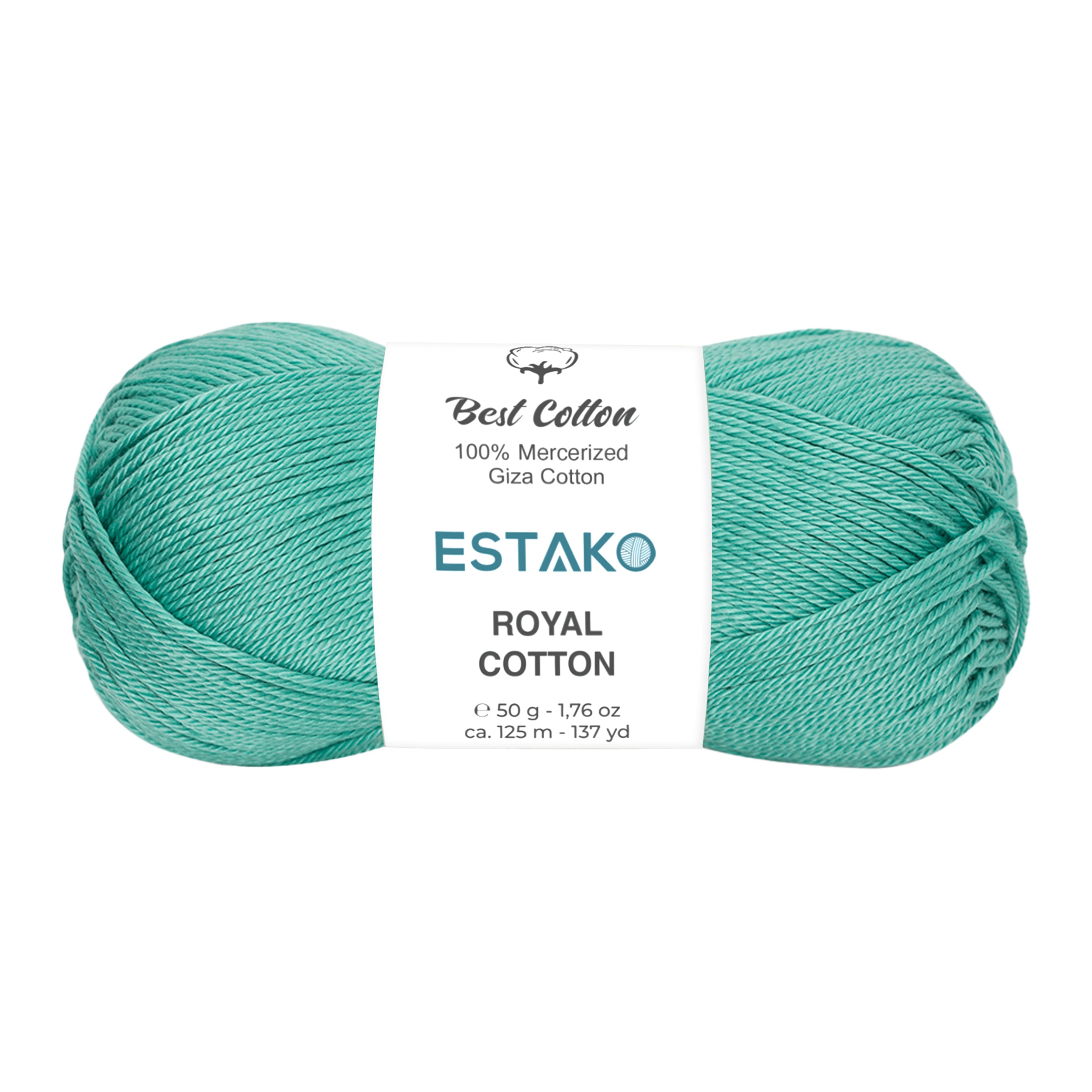
Yes, for most projects. Cotton holds shape and shows stitches cleanly, and mercerized cotton goes one step further. Sarah Maker ("Best Yarn for Amigurumi") describes mercerized cotton as treated to take dye better and resist fuzzing and pilling, which keeps colors sharp and faces clean wash after wash.
That is the fiber behind Estako Royal Cotton. It is 100% mercerized Giza cotton, 50g / 137 yds (125m), with a 2.5 to 3.5mm hook on the label. For amigurumi we drop to a 2 to 2.5mm hook for a denser fabric. In our catalog it sits at #1 Super Fine, but it is a substantial fine cotton, so your stitches stay crisp and the stuffing stays hidden.
Want a little more give and an easy-care finish? Estako Happy Cotton is a 60% cotton, 40% acrylic blend, 50g / 180 yds, machine washable. The acrylic softens the hand and adds yardage, which is handy for toys that will be handled, washed, and loved hard.
What hook size should you use for amigurumi?
Use a hook smaller than the yarn label recommends. Tiny Curl Crochet ("Amigurumi Hook Size & Yarn Weight Guide") advises going 1 to 2 mm under the label, because label sizing makes loose stitches that let stuffing push through the gaps. Tighter stitches are the whole trick.
Here is the quick translation for our amigurumi-friendly lines.
| Estako yarn | Label hook | Amigurumi hook (go down) |
|---|---|---|
| Royal Cotton | 2.5 to 3.5mm | 2.0 to 2.5mm |
| Happy Cotton | 3 to 4mm | 2.5 to 3.0mm |
| Dream | 2.5 to 3.5mm | 2.0 to 2.75mm |
| Softy | 4 to 5mm | 3.0 to 3.5mm |
| Velvet | 3.5 to 4mm | 3.0mm |
If your first round of single crochet shows daylight between stitches, frog it and drop another quarter millimeter. A fabric that feels almost stiff in the hand is correct for amigurumi.
Best Estako yarns for amigurumi
For amigurumi we reach for Royal Cotton, Happy Cotton, and Dream for classic toys, and the chenille lines Velvet, Softy, and Velvet XL for plush ones. Here is the full comparison.
| Estako yarn | Fiber | Weight (CYCA) | Skein / yardage | Label hook | Best amigurumi use |
|---|---|---|---|---|---|
| Royal Cotton | 100% mercerized Giza cotton | #1 Super Fine | 50g / 137 yds | 2.5 to 3.5mm | Crisp, detailed toys that hold shape |
| Happy Cotton | 60% cotton / 40% acrylic | #2 Sport | 50g / 180 yds | 3 to 4mm | Soft toys, easy-care gifts |
| Dream | 100% microfiber acrylic | #1 Super Fine | 100g / 383 yds | 2.5 to 3.5mm | Budget makes, big yardage, soft hand |
| Softy | 100% polyester chenille | #5 Bulky | 100g / 98 yds | 4 to 5mm | Plush, squishy small toys |
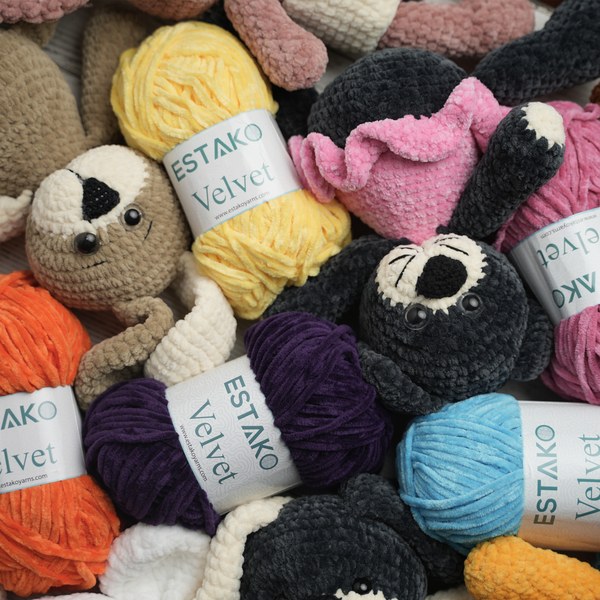
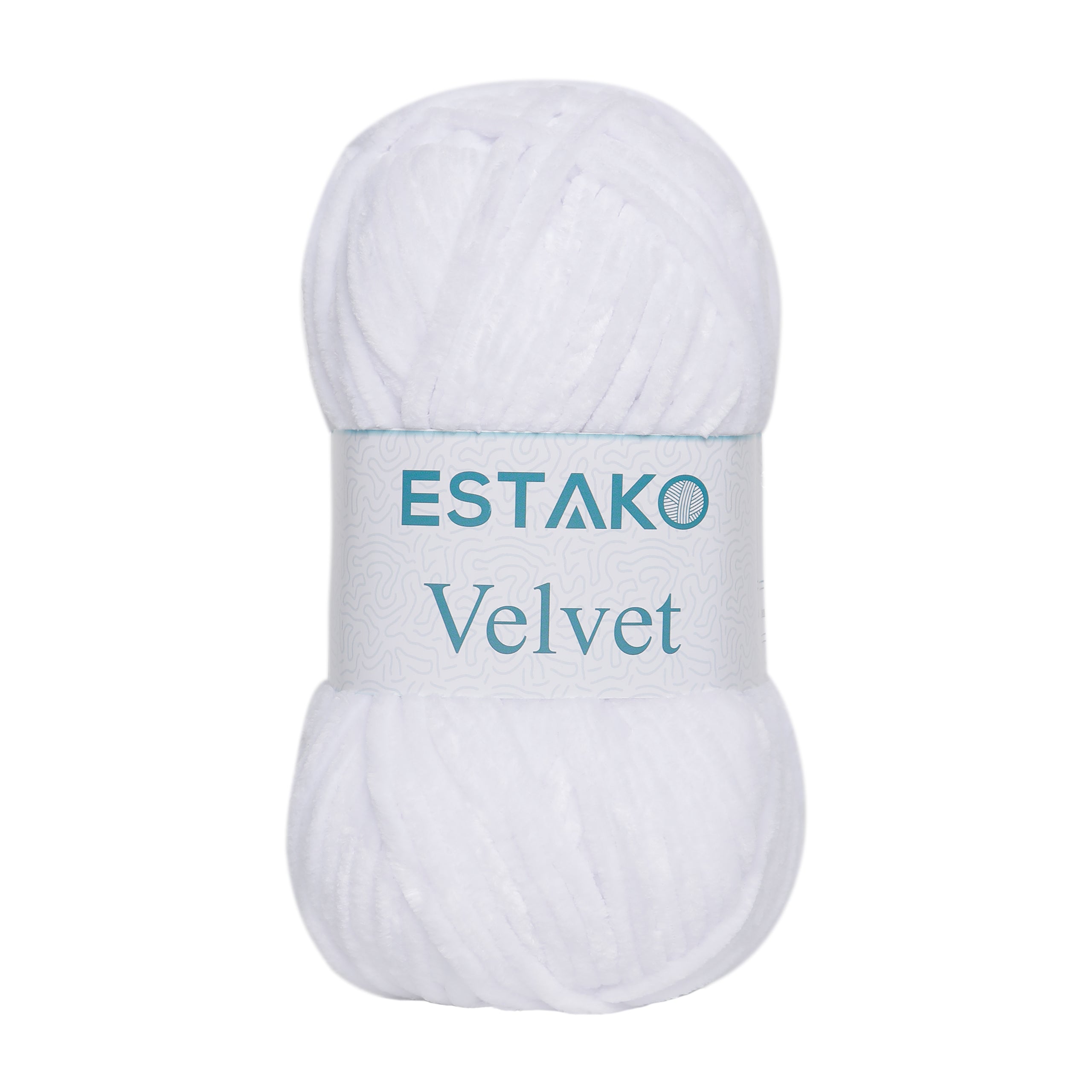
| Velvet | 100% polyester chenille | #6 Super Bulky | 100g / 132 yds | 3.5 to 4mm | Cuddly plush toys |
| Velvet XL | 100% polyester chenille | #6 Super Bulky | 100g / 55 yds | 8 to 9mm | Jumbo plush, quick makes |
Dream deserves a note for budget-minded makers. It is 100% microfiber acrylic with a silk-like hand, anti-pilling, and a generous 100g / 383 yds. That yardage crochets a lot of toys per skein, so it is a smart pick for testing a pattern or making a batch for a craft fair. For the weight numbers behind all of these, see our yarn weight guide.
Velvet and chenille yarn for plush amigurumi
Chenille makes irresistibly soft toys, but it behaves differently from cotton. Lion Brand Yarn explains that chenille yarns tend to "worm," meaning loops pull away from the fabric and coil back, because of how the yarn is built. Tighter single crochet and a smaller hook reduce it.
Reach for chenille when you want a squishy, cuddly result rather than fine facial detail. Estako Softy is a plush #5 bulky chenille that works up small plush toys, while Estako Velvet and Velvet XL give you bigger, faster, huggable makes. Chenille is harder to frog and the magic ring can be fiddly, so it is not where I would start on day one. If you are new, cotton first, chenille once your tension is steady. New to fibres? Our yarn fiber guide compares cotton, wool, and acrylic. Newer still? Start with our best yarn for beginners guide.
Chenille is also part of why the cozy, nostalgic look took off this year. If that aesthetic is your thing, our Grandmacore yarn trends guide covers the chunky, plush textures driving it.
Is amigurumi yarn safe for toys and baby gifts?
Two different things decide that: the fiber's chemistry and the toy's construction. Every Estako yarn carries STANDARD 100 by OEKO-TEX® certification, which OEKO-TEX® defines as testing every component against a list of over 1,000 harmful substances. That covers the textile itself.
Construction is the other half, and it is on the maker. Elise Rose Crochet ("Amigurumi Eyes") notes that plastic safety eyes are small parts that can loosen, so securely embroidered or crocheted features are the safer choice for toys made for very young children. Choose an OEKO-TEX® certified cotton like Royal Cotton or Happy Cotton, then finish faces with embroidery rather than glue-in parts. Making a blanket to match the toy? See our best yarn for baby blankets. You can browse the full range in our cotton yarn collection.
Frequently Asked Questions
What is the best yarn for amigurumi?
Smooth cotton or mercerized cotton in a fine weight is the maker favorite, because it shows stitches clearly and holds shape (Purl Soho, 2025). Estako Royal Cotton, a 100% mercerized Giza cotton, is a strong default. Cotton blends like Happy Cotton add softness and easy care.
What weight yarn is best for amigurumi?
Most amigurumi uses a fine weight, roughly CYCA #1 Super Fine to #2 Sport, worked tightly. Lighter yarn plus a small hook gives the dense fabric a stuffed toy needs. Royal Cotton (#1) and Happy Cotton (#2) both fit, and chenille bulky yarns suit larger plush toys.
Can you use velvet or chenille yarn for amigurumi?
Yes, for plush, squishy toys. Chenille is wonderfully soft, but Lion Brand notes it tends to "worm" and it hides fine detail. Use tight single crochet and a smaller hook, and save it for cuddly shapes rather than detailed faces. Estako Softy and Velvet are good chenille options.
What hook size should I use for amigurumi?
Go 1 to 2 mm smaller than the yarn label suggests (Tiny Curl Crochet). For Estako Royal Cotton, that means a 2.0 to 2.5mm hook instead of the labeled 2.5 to 3.5mm. The goal is stitches tight enough that stuffing cannot push through.
Is acrylic or cotton better for amigurumi?
Cotton holds shape better and shows stitches more crisply, so it is the classic choice. A quality microfiber acrylic like Estako Dream is softer, lighter, and budget-friendly with big yardage, which makes it a good pick for soft toys and batch projects.
Bottom line
For amigurumi that holds its shape and shows every stitch, start with a smooth cotton on a small hook. Royal Cotton is our go-to, Happy Cotton adds softness and easy care, and Dream stretches your budget. When you want plush instead of precise, switch to chenille like Softy or Velvet. Every skein is OEKO-TEX® certified and ships worldwide with duties included.
New to yarn weights? Our yarn weight guide explains CYCA #0 to #7, and the Grandmacore trends guide covers the textures behind the craft revival.
Making a larger set in one color? Matching dye lots keeps every piece consistent, and the same crisp cotton shines in granny square blankets.
Happy hooking, Esref
Esref is the founder of Estako Yarns, a modern D2C brand that ships OEKO-TEX® Standard 100 certified yarn worldwide from Türkiye, with duties included.
Sources
- Michaels, 2026 Creativity Trend Report, retrieved 2026-06-01, https://www.michaelspressroom.com/news/detail/5025/michaels-unveils-2026-creativity-trend-report-revealing
- Purl Soho, "Knitting With Cotton Yarn: Why We Love It," 2025, retrieved 2026-06-01, https://www.purlsoho.com/create/2025/04/30/cotton-yarn-why-we-love-it-and-you-will-too/
- The Knitting Guild Association, "Fiber Content and Choosing the Right Yarn for Your Project," retrieved 2026-06-01, https://tkga.org/fiber-content-and-choosing-the-right-yarn-for-your-project/
- Sarah Maker, "Best Yarn for Amigurumi," retrieved 2026-06-01, https://sarahmaker.com/yarn-for-amigurumi/
- Tiny Curl Crochet, "Amigurumi Hook Size & Yarn Weight Guide," retrieved 2026-06-01, https://www.tinycurl.co/amigurumi-hook-size/
- Lion Brand Yarn, chenille loops ("worming") support article, retrieved 2026-06-01, https://support.lionbrand.com/support/solutions/articles/17000035392
- Elise Rose Crochet, "Amigurumi Eyes: Everything You Need to Know," retrieved 2026-06-01, https://eliserosecrochet.com/amigurumi-eyes-everything-you-need-to-know/
- OEKO-TEX®, STANDARD 100, retrieved 2026-06-01, https://www.oeko-tex.com/en/our-standards/oeko-tex-standard-100/


