

The best yarn for most sweaters is a smooth worsted-weight wool or wool blend. Wool is elastic, so cuffs and ribbing spring back and the body keeps its shape, and worsted knits at a comfortable gauge that suits almost any pattern. For a soft layer worn against the skin, drop to a fine merino blend. For a cosy sweater you can finish in a weekend, jump to super bulky.
Sweaters are the make most knitters graduate to once the smaller projects stop being a challenge, and a lot of people are picking up needles right now. Michaels (2026 Creativity Trend Report) reported that searches for analog hobbies like knitting and crochet surged 136% in six months, with yarn accessory sales up 40% year over year. The yarn you choose is what decides whether that first sweater becomes one you reach for every winter or one that lives in a drawer.
Key Takeaways - Worsted-weight wool or wool blend is the workhorse for sweaters: warm, elastic, and easy to gauge (Craft Yarn Council). - Wool and wool blends have elasticity and memory, so they hold a sweater's shape, while cotton has low elasticity and can sag (TKGA). - An adult sweater takes roughly 1,125 to 1,625 yards in worsted, more in finer DK, and fewer in bulky (Lion Brand). - Every Estako yarn carries STANDARD 100 by OEKO-TEX® certification, tested against 1,000+ harmful substances (OEKO-TEX®).
What is the best yarn for a sweater?
For most sweaters, reach for a worsted-weight wool or wool blend with a smooth, round body. Worsted sits at the centre of the Craft Yarn Council weight system as the #4 Medium category, the all-rounder that knits at a comfortable gauge on mid-size needles (Craft Yarn Council, Standard Yarn Weight System). Wool earns its place because it is elastic. The Knitting Guild Association describes wool as warm, elastic, and great for everyday garments, which is the springiness that lets ribbing and cuffs bounce back instead of stretching out (TKGA).
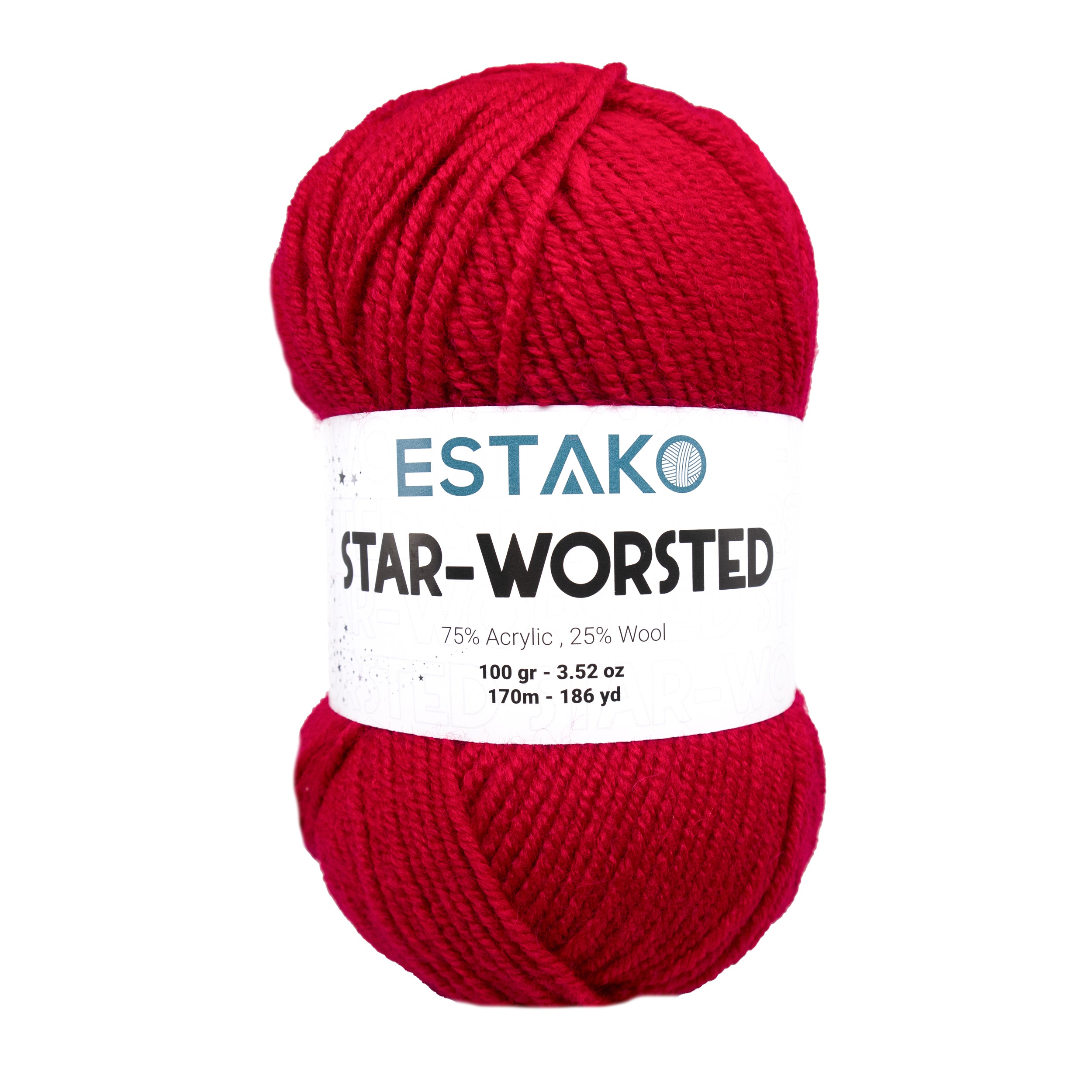
That is why our default sweater yarn is Estako Star-Worsted, a 75% acrylic, 25% wool worsted. The wool adds warmth and memory, the acrylic keeps it machine-washable and affordable, and at 100g / 186 yds it covers an adult sweater in a sensible number of skeins.
Our take: if you are knitting your first sweater, worsted is the forgiving middle ground. It is fast enough to keep you motivated, fine enough to look refined, and easy to find patterns for. Save the very fine and the very chunky yarns for sweater number two.
What weight yarn is best for sweaters?
Sweaters work across a wide band of weights, from light DK to super bulky, and the weight sets the gauge, the warmth, and how fast it knits. The Craft Yarn Council publishes the standard knit gauge and needle range for each (Craft Yarn Council, Standard Yarn Weight System).
| Weight (CYCA) | Knit needle | Knit gauge / 4 in | Sweater feel | Estako pick |
|---|---|---|---|---|
| #3 Light / DK | US 5 to 7 (3.75 to 4.5 mm) | 21 to 24 sts | Light, drapey, easy to layer | DailyKnit-DK |
| #4 Worsted | US 7 to 9 (4.5 to 5.5 mm) | 16 to 20 sts | Year-round all-rounder | Star-Worsted |
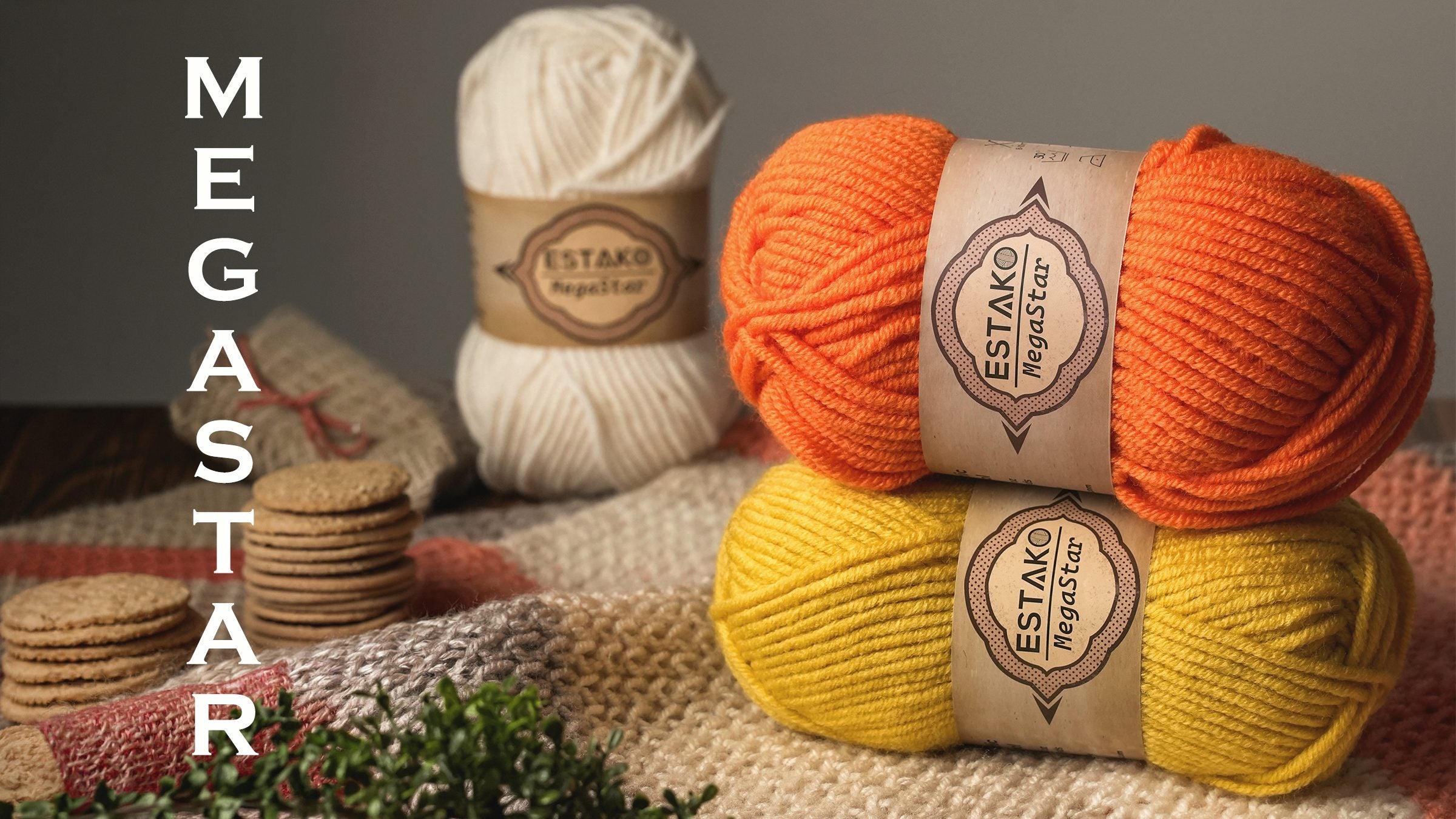
| #5 Bulky | US 9 to 11 (5.5 to 8 mm) | 12 to 15 sts | Plush, warm, faster | MegaStar |
| #6 Super Bulky | US 11 to 17 (8 to 12.75 mm) | 7 to 11 sts | Bold, cosy, weekend finish | Cozy |
Lighter weights like DK give a finer, drapier sweater that layers well in spring and autumn. Worsted is the year-round all-rounder. Bulky and super bulky trade fine detail for speed and warmth. For the full breakdown of every weight from #0 to #7, see our yarn weight guide.
Does wool or cotton make a better sweater?
For a warm sweater that holds its shape, wool wins. For a light warm-weather top, cotton has its place. Our yarn fiber guide compares cotton, wool, and acrylic in full. The difference is elasticity. The Knitting Guild Association notes that cotton has low elasticity, so a heavy cotton sweater can stretch and sag over time, while wool springs back (TKGA). Cotton makes up for it with lovely drape, which is why it suits flowy summer tops more than structured winter knits.
| Fiber | Warmth | Holds shape | Care | Best sweater use |
|---|---|---|---|---|
| Wool / wool blend | High | Excellent, springs back | Wash cool, lay flat | Everyday pullovers, ribbing, cables |
| Merino / fine wool blend | High | Very good | Gentle wash | Soft next-to-skin layers, fine sweaters |
| Acrylic / acrylic blend | Medium | Good | Machine wash | Easy-care, budget, kids |
| Cotton | Low to medium | Low, can sag | Machine wash | Warm-weather tops, drape |
Softness is the other half of the wool question, and it comes down to fineness. Woolmark explains that wool softness is set by fibre diameter, measured in microns, and that merino has a much finer micron than other wools, with natural crimp that suits next-to-skin wear (Woolmark). Itch comes from coarse fibres, not from wool as a category, so a fine merino blend feels soft where a coarse wool would scratch. As a rule of thumb, makers treat wool around 20 microns and under as soft enough for most people to wear against the skin, though sensitivity varies.
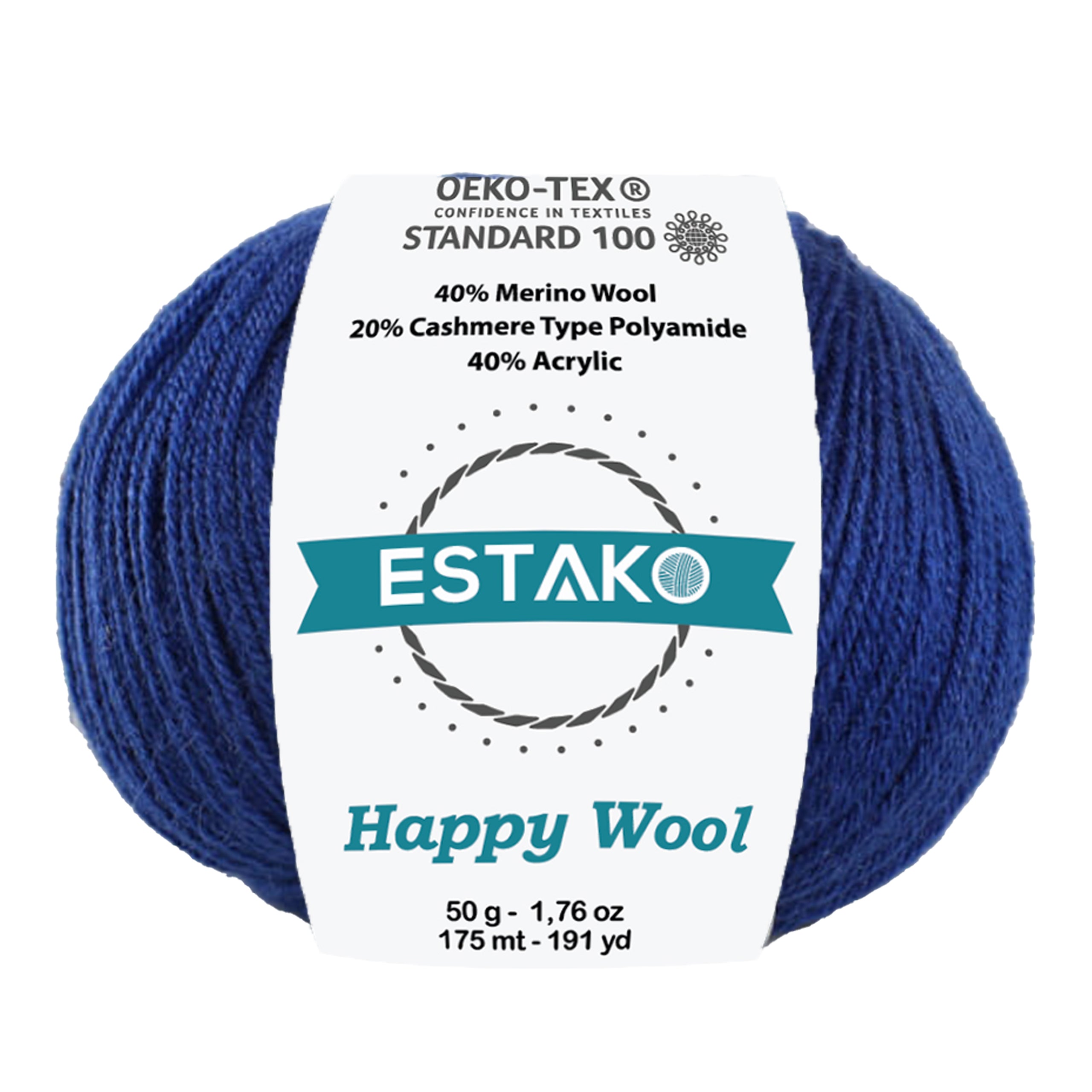
That is the thinking behind Estako Happy Wool, our softest sweater yarn. It is a 40% merino, 20% cashmere-type polyamide, 40% acrylic blend, so it carries merino warmth with a cashmere-like hand, fine enough for a sweater you wear over a t-shirt or none at all. If you want a warm-weather top instead, a mercerized cotton like Royal Cotton gives crisp stitches and drape. Browse the full range in our cotton collection.
How much yarn do you need for a sweater?
Plan for roughly 1,125 to 1,625 yards of worsted for an adult sweater, then adjust for weight. Lion Brand's estimator puts an adult sweater at about 1,125 to 1,625 yards in worsted, 1,500 to 2,250 in finer DK, and 825 to 1,125 in bulky (Lion Brand). Finer yarn needs more length to cover the same area, which is why DK uses the most yards of the three.
| Weight | Yards (adult sweater) | Estako yarn (yardage) | Approx skeins |
|---|---|---|---|
| #3 DK | 1,500 to 2,250 | DailyKnit-DK (273 yds) | ~6 to 9 |
| #4 Worsted | 1,125 to 1,625 | Star-Worsted (186 yds) | ~7 to 9 |
| #5 Bulky | 825 to 1,125 | MegaStar (120 yds) | ~7 to 10 |
| #6 Super Bulky | 825 to 1,125 | Cozy (65 yds) | ~13 to 18 |
Happy Wool sits finer than this table at #1 Super Fine, and fine-gauge sweaters are the most yarn-hungry of all, often 1,600 yards or more, which is roughly 8 to 11 of its 191-yard balls. That extra yardage is the trade for next-to-skin softness.
To turn yards into balls, divide the pattern total by the yardage on your Estako label, then add one spare ball in the same dye lot. Lots rarely match if you reorder later, and running short on a sleeve is the classic heartbreak, which is why we cover ordering in our yarn dye lots guide.
Best Estako yarns for sweaters
Five Estako yarns cover the sweater range, from fine and soft to super chunky, plus a cotton for summer tops. Every one carries STANDARD 100 by OEKO-TEX® certification.
| Estako yarn | Fiber | Weight (CYCA) | Skein / yardage | Best sweater use |
|---|---|---|---|---|
| Star-Worsted | 75% acrylic / 25% wool | #4 Worsted | 100g / 186 yds | The all-round sweater workhorse |
| Happy Wool | 40% merino / 20% cashmere-type / 40% acrylic | #1 Super Fine | 50g / 191 yds | Soft, next-to-skin fine sweaters |
| MegaStar | 75% acrylic / 25% wool | #5 Bulky | 100g / 120 yds | Plush, warm, faster pullovers |
| Cozy | 80% acrylic / 20% wool | #6 Super Bulky | 100g / 65 yds | Bold, cosy, weekend sweaters |
| DailyKnit-DK | 100% anti-pilling acrylic | #3 Light / DK | 100g / 273 yds | Light, easy-care, layering knits |
For most makers, Star-Worsted is the everyday lead. For plush warmth that knits faster, step up to MegaStar, a 75/25 bulky wool blend. For the biggest, cosiest sweaters in a weekend, Cozy is an 80/20 super bulky. Browse the mid-weights in the worsted and aran collection and the chunky end in the super bulky collection.
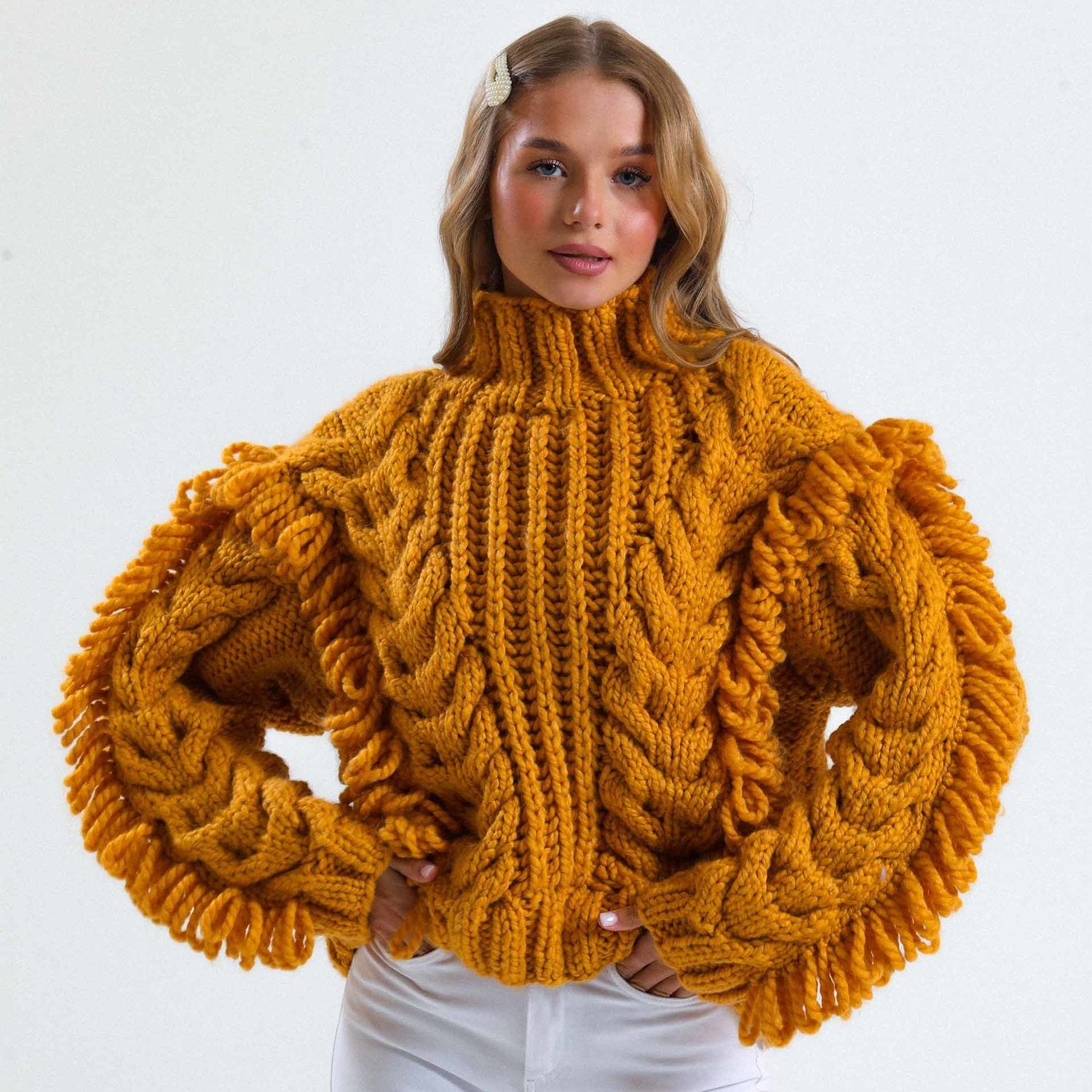
Planning a chunky, cable-heavy cardigan specifically? That make has its own rules for yardage and cable definition, and we go deep on it in our chunky cable cardigan yarn guide. Oversized, cosy sweaters are also the hero of the Grandmacore trend, so these are the yarns behind the look.
Caring for a wool sweater so it holds its shape
Wash a wool or wool-blend sweater cool on a gentle cycle and lay it flat to dry. Heat and agitation are what felt and shrink wool, so gentle handling protects the fibres, while drying flat lets you reshape, or block, the piece so the shoulders and ribbing sit right. An acrylic-rich blend like Star-Worsted or Cozy resists felting and dries faster than pure wool, so reshape it while damp and let it dry fully before you wear it.
Frequently Asked Questions
What is the best yarn for a sweater?
A smooth worsted-weight wool or wool blend is the maker default, because wool is elastic and holds the sweater's shape while worsted knits at an easy gauge (TKGA; Craft Yarn Council). Estako Star-Worsted, a 75% acrylic, 25% wool worsted, is a strong all-round choice.
What weight yarn should I use for a sweater?
Anything from light DK to super bulky works. DK gives a fine, drapey, layering sweater, worsted is the year-round all-rounder, and bulky to super bulky knit up fast and warm. The Craft Yarn Council lists the gauge and needle range for each weight.
How much yarn do I need for an adult sweater?
About 1,125 to 1,625 yards of worsted, 1,500 to 2,250 of finer DK, or 825 to 1,125 of bulky, per Lion Brand's estimator. Finer yarn needs more length. Buy one spare ball in the same dye lot so you do not run short on a sleeve.
Is wool or cotton better for a sweater?
Wool for warmth and shape, cotton for light warm-weather tops. Wool is elastic and springs back, while cotton has low elasticity and can sag in a heavy garment (TKGA). Cotton's strength is drape, which suits flowy summer knits. Acrylic-wool blends like Estako Star-Worsted give wool's warmth with machine-washable ease.
Is merino wool soft enough for a sweater?
Yes, when the fibre is fine. Woolmark explains that softness is set by fibre diameter in microns, and merino is much finer than other wools, with crimp that suits next-to-skin wear (Woolmark). Itch comes from coarse fibres, not wool itself. Estako Happy Wool is a fine merino and cashmere-type blend made for soft sweaters.
The bottom line
For a sweater you will actually wear, start with a worsted-weight wool blend, match your yardage to the pattern plus a spare ball, and block it so it keeps its shape. Star-Worsted is our everyday lead, Happy Wool is the soft next-to-skin upgrade, and Cozy is the fast, chunky option. Every skein is OEKO-TEX® certified and ships worldwide with duties included.
New to weights? Start with the yarn weight guide. First garment? Our best yarn for beginners guide keeps it simple, and the Grandmacore trends guide covers the cosy, oversized look driving the craft revival.
Happy knitting, Esref
Esref is the founder of Estako Yarns, a modern D2C brand that ships OEKO-TEX® Standard 100 certified yarn worldwide from Türkiye, with duties included.
Sources
- Craft Yarn Council, Standard Yarn Weight System, retrieved 2026-06-02, https://www.craftyarncouncil.com/standards/yarn-weight-system
- Lion Brand Yarn, How Much Yarn Do I Need?, retrieved 2026-06-02, https://www.lionbrand.com/pages/how-much-yarn-do-i-need
- The Knitting Guild Association, "Fiber Content and Choosing the Right Yarn for Your Project," retrieved 2026-06-02, https://tkga.org/fiber-content-and-choosing-the-right-yarn-for-your-project/
- Woolmark, "Why is Merino wool so soft," retrieved 2026-06-02, https://www.woolmark.com/fibre/soft-merino-wool/
- Michaels, 2026 Creativity Trend Report, retrieved 2026-06-02, https://www.michaelspressroom.com/news/detail/5025/michaels-unveils-2026-creativity-trend-report-revealing
- OEKO-TEX®, STANDARD 100, retrieved 2026-06-02, https://www.oeko-tex.com/en/our-standards/oeko-tex-standard-100/


